You rely on your furnace to keep your home comfortable, and when it falters you need clear, practical steps to fix it fast. If your furnace shows signs like uneven heating, strange noises, or frequent cycling, you can often troubleshoot simple issues yourself but should call a licensed technician for complex or safety-related problems.
This article Furnace Repairs walks you through common causes of furnace malfunctions and how professionals diagnose and repair them, so you know when to act and what to expect from service. You’ll learn what to check, when to book repair service, and how professional solutions restore safe, efficient heating.
Common Causes of Furnace Malfunctions
You’ll most often see issues that prevent heat delivery, make the system run inefficiently, or cause unsafe operation. The three frequent root causes below explain how these problems occur and what to check first.
Thermostat Issues
A malfunctioning thermostat often causes no-heat situations or short cycling. Start by confirming the thermostat is set to “heat” and the setpoint is above room temperature. Replace the batteries if the display is dim or blank.
Check wiring and configuration next. Loose or corroded wires, incorrect heat anticipator settings, or an incompatible programmable schedule can stop the furnace from receiving a proper call for heat. If you have a smart thermostat, verify Wi‑Fi connectivity and firmware updates.
For older mercury or mechanical thermostats, calibration drift is common. Use a separate thermometer to compare readings; a 2–3°F difference can trigger frequent on/off cycles or poor temperature control. When troubleshooting, always turn power off at the furnace before inspecting wiring.
Ignition or Pilot Control Problems
If the furnace won’t light, focus on the ignition system or pilot assembly. For gas furnaces, issues include a dirty flame sensor, a failing hot surface igniter, a clogged pilot tube, or a faulty gas valve. A furnace that tries to ignite repeatedly but fails often leaves a diagnostic LED or error code—note that code for technicians.
Inspect the flame sensor for dark buildup; a gentle clean with fine sandpaper or emery cloth can restore proper sensing. Hot surface igniters become brittle and crack with age; they require replacement rather than repair. If you smell gas, shut off the gas supply, ventilate the area, and call a licensed pro immediately.
Pilot light systems are less common but still used. A weak or extinguished pilot can result from draft, a dirty pilot orifice, or a failing thermocouple. Replacing the thermocouple or cleaning the orifice usually fixes pilot-related failures, but work on gas components should be handled by qualified personnel.
Dirty or Clogged Filters
Clogged air filters restrict airflow, reduce heat transfer, and can overheat the furnace. Check filters every 1–3 months; replace disposable filters or clean reusable ones according to manufacturer instructions. Look for visible dust buildup, sagging pleats, or dark streaks.
Restricted airflow forces the blower motor to work harder and may cause the furnace to short cycle or trip safety limits. That stress shortens motor life and raises energy use. Also check return vents and the area around the filter for obstructions like furniture or carpets.
Use the correct filter size and Minimum Efficiency Reporting Value (MERV) rating for your system. Higher MERV ratings capture more particles but can impede airflow in older furnaces; balance filtration needs with manufacturer recommendations to avoid performance problems.
Professional Repair Solutions
You’ll get a clear, step-by-step approach that identifies the issue, protects your home and family, and ensures the technician you hire is qualified and insured. Expect targeted diagnostics, concrete safety actions, and hiring criteria that protect your investment.
Diagnostic Assessment Process
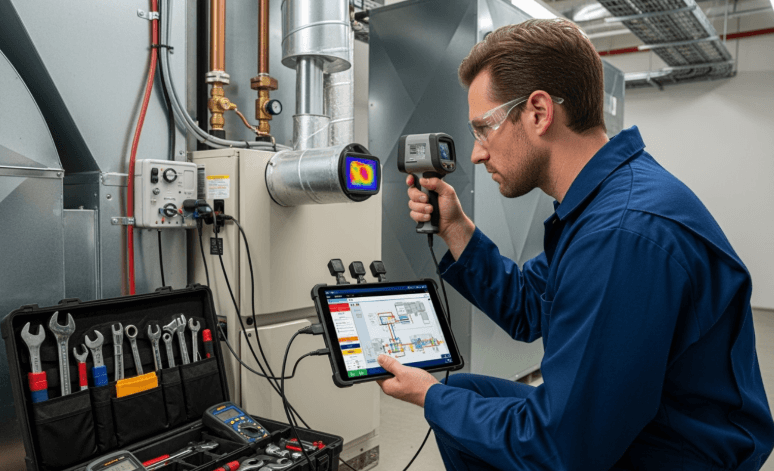
A technician begins with a visual and operational inspection: burners, heat exchanger, pilot/ignition system, filters, and thermostat wiring. They then run the furnace to observe flame color, blower function, and cycling behavior to pinpoint symptoms like short-cycling or weak heat.
Technicians commonly use these specific tests:
- Combustion analysis with a flue gas analyzer to check CO and efficiency.
- Manifold and gas pressure checks for proper fuel delivery.
- Electrical diagnostics using a multimeter to verify control board, limit switches, and capacitors.
- Airflow measurement to detect clogged filters or duct restrictions.
You should receive a written repair estimate that lists found faults, recommended parts, labor hours, and estimated time to complete. Ask for model-specific part numbers and warranty details before approving work.
See also: Copper Mining: Modern Techniques, Environmental Challenges, and Market Outlook
Safety Considerations During Repairs
Natural gas and carbon monoxide are critical hazards; the technician must verify no gas leaks and test for CO both before and after repairs. They should shut off power and fuel sources when replacing components that could spark or leak.
Insist on these safety steps:
- Gas leak test with a manometer or soap test at fittings and valves.
- CO monitoring with a calibrated detector while the furnace runs.
- Electrical lockout/tagout when working on control circuits.
- Heat exchanger inspection for cracks using visual and dye-penetrant or borescope methods if needed.
Ensure the tech wears PPE (safety glasses, gloves) and restores all safety controls—thermostat limiting, pressure switches, and venting—before leaving. Request documentation that safety checks were completed and that the system meets local code and manufacturer service requirements.
Selecting a Qualified Technician
Look for technicians who carry current HVAC licenses for your state or municipality and have EPA Section 608 certification if the system uses refrigerants. Confirm business insurance that includes general liability and workers’ compensation.
Use these screening steps:
- Check professional affiliations (e.g., NATE certification) and ask for recent references.
- Verify they use manufacturer-approved parts and follow service manuals for your furnace model.
- Request a written service agreement that details hourly rates, flat-fee charges, parts markup, and guarantees.
Get at least two written estimates to compare scope and price. Keep copies of invoices, part numbers, and warranty paperwork so you can verify completed work and claim any service guarantees.