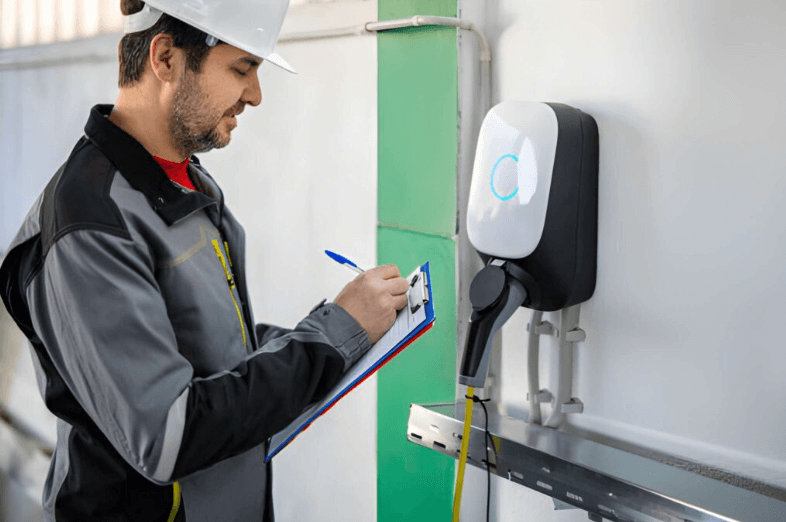
Looking for an “EV charger installer near me” means you want a fast, safe, and code-compliant setup that matches your vehicle, home electrical system, and budget. Start by prioritizing certified, experienced electricians or certified installers who can evaluate load capacity, recommend the right Level (1 or 2) or hardwired option, and handle permits and rebates.
In EV charger You’ll learn how to spot reliable professionals, compare quotes, and understand installation choices so you avoid surprises and get the charging speed you need. Expect practical tips on what questions to ask, what to watch for in estimates, and how installation impacts cost and timing.
Choosing a Reliable Professional
Focus on verifiable credentials, track record with installations like yours, and real customer feedback. Prioritize electricians who handle permits, follow code, and communicate clear pricing and timelines.
Qualifications and Certifications
Look for a licensed electrician with specific EV charger training and a current state or local license number you can verify. Certifications such as NATE or manufacturer-specific installer credentials (e.g., Tesla, ChargePoint) show hands-on training with particular hardware.
Ask for proof of liability and workers’ compensation insurance before work begins. Confirm the installer knows local electrical code and permit requirements so your installation passes inspection.
Request documentation that the technician completed load calculations and panel assessments. That ensures they won’t overload your system and helps determine whether a panel upgrade or subpanel is required.
Experience with Home and Commercial Installations
Check that the installer has completed several projects similar to yours—residential Level 2 installs differ from commercial multi-circuit setups. For homes, confirm experience mounting wall chargers, running conduit, and integrating with a smart charger or load-management equipment.
For commercial work, verify ability to install multiple stations, set up metering or billing systems, and coordinate site plans and ADA considerations. Ask how they handled parking layouts, tenant access, and electrical capacity upgrades on past jobs.
Request a portfolio or photos of completed installs and ask about common challenges they solved, such as weak service, shared-meter sites, or trenching and conduit runs.
Evaluating Customer Reviews
Read recent reviews on multiple platforms—Google, Thumbtack, Home Depot services, and local BBB listings—to detect consistent strengths or recurring issues. Focus on comments about timeliness, clarity of estimates, permit handling, and post-install support.
Pay attention to how the company responds to negative reviews; professional, prompt replies indicate accountability. Contact past customers when possible to ask specific questions about workmanship, communication, and whether the final cost matched the estimate.
Look for reviews that mention clean work sites, code-compliant installations, and successful inspections—those details matter more than generic praise.
Understanding Installation Options
You’ll choose between charger types, confirm your home’s electrical capacity, and follow local permit and inspection rules. Each decision affects cost, charging speed, and long-term reliability.
Types of EV Chargers Available
Level 1: uses a standard 120V household outlet and delivers about 3–5 miles of range per hour. It requires no special wiring but supports only overnight or low-mileage needs.
Level 2: runs on 240V and typically provides 20–60 miles of range per hour. Most homeowners opt for Level 2 for daily driving needs. You’ll decide between hardwired or plug-in units; hardwired looks cleaner and may be required by some manufacturers for warranty compliance.
DC fast chargers: deliver very high power and very fast charging but are rare and costly for residential installs. Consider public DC fast charging unless you have commercial property and a substantial electrical upgrade budget.
Connector types: ensure compatibility with your EV (e.g., J1772 for most BEVs and EVs, CCS for many newer vehicles, Tesla uses its own connector or an adapter). Choose a unit with power-sharing, Wi‑Fi, or smart scheduling if you want load management or time-of-use billing optimization.
See also: IoT Technologies in Healthcare Monitoring
Site Assessment and Power Requirements
An on-site electrical inspection identifies panel capacity, conduit runs, and distance from panel to mounting location. Expect an electrician to check main breaker size, spare capacity, and whether a subpanel or service upgrade is necessary.
Measure cable length and conduit complexity to estimate labor and materials. Long runs or trenching raise costs. Confirm available amperage: a typical Level 2 install requires 30–60A dedicated circuit depending on charger rating.
If you have multiple EVs or plan future chargers, consider a 200A service or a load-management system to avoid costly service upgrades later. Battery storage or smart chargers can reduce peak load and leverage time-of-use rates.
Permits and Local Compliance
Most municipalities require an electrical permit and final inspection for new dedicated circuits or panel upgrades. Contact your local permitting office or have the installer handle permits; licensed electricians often pull permits on your behalf.
Check homeowner association (HOA) rules and building codes for visible conduit, mounting locations, or shared-parking installations. For multi-unit or workplace installs, provincial/in-state incentive programs may require specific equipment or certified installers for rebates.
Keep documentation: permit approval, inspection certificate, and installer warranty. These records support resale value, warranty claims, and eligibility for available provincial or federal rebates.