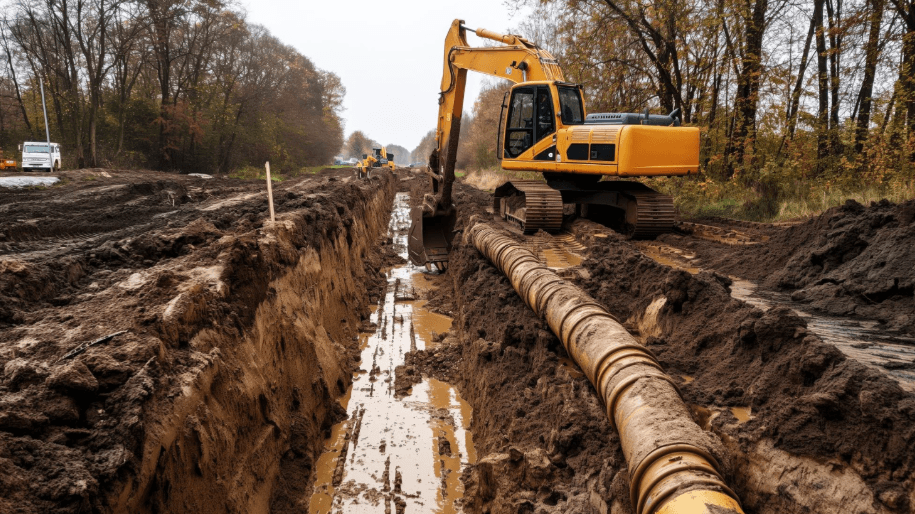
You can dig trench a safe, efficient trench without guessing your way through the job — plan the route, pick the right tools for the soil and depth, and check for underground utilities before you put a shovel in the ground. In Dig Trenches, Doing those three things dramatically reduces risk, saves time, and prevents costly repairs.
Expect practical guidance on choosing hand tools versus powered trenchers, setting the proper slope for drainage, and marking utilities so you avoid surprises. You’ll get clear, step-by-step tips on preparation and best practices that keep the work steady and predictable.
Essential Equipment and Preparation
Prepare by confirming site hazards, choosing equipment that matches soil and depth, and assembling PPE and shoring before you start digging.
Safety Guidelines and Personal Protective Gear
You must wear a hard hat, high-visibility vest, steel-toe boots, eye protection, and durable gloves at all times. Use hearing protection when operating or standing near mechanical trenchers or heavy excavators.
Carry a gas detector if utilities may be present and a first-aid kit on site. For trenches deeper than 1 meter (about 3.3 feet), plan for and install protective systems—sloping, benching, shielding, or shoring—before anyone enters the excavation.
Establish an emergency egress every 25 feet of trench length and keep spoil piles at least 2 feet back from trench edges. Assign a competent person to inspect the trench daily and after any rain, vibration, or change in conditions.
Site Assessment and Planning
Locate and mark all underground utilities before you dig. Contact your local utility-locate service, and verify electrical, gas, water, and telecom lines on site with hand tools or vacuum excavation near marked lines.
Assess soil type (sand, silt, clay, or mixed) by performing a simple hand-moisture and thumb-press test or by consulting geotechnical info. Use soil classification to determine side-slope ratios and whether shielding or shoring is required.
Plan trench depth, width, and access points on scaled drawings. Account for surface conditions, drainage, groundwater level, and nearby loads (traffic, equipment, stockpiles) that could increase collapse risk.
Selecting the Right Tools
Choose equipment based on trench width, depth, and ground conditions. For narrow utility lines in soft soil, a walk-behind trencher or mini-excavator with a narrow bucket works well. For long, shallow trenches, consider a ride-on trencher or chain trencher.
Use a full-size excavator with appropriate bucket or tilt attachments for deeper lines or when removing large spoil volumes. Bring hand tools—shovels, picks, pry bars—for final grading, clean-up near utilities, and working in tight spaces.
Keep a plate compactor, wheelbarrow, and hose for dust control and material handling. Ensure all powered equipment has guards, functioning lights, and inspected hydraulic lines.
Marking and Measuring the Trench Path
Start by marking the trench centerline and edges with spray paint, stakes, or string lines tied to stakes. Use a measuring tape or survey wheel to confirm total length and station points at regular intervals (every 10–25 feet).
Set grade and invert elevations with a laser level or transit and record them on site plans. Mark utility crossing points, burial depths, and locations for access ladders or safety shields.
Maintain a visible, continuous boundary around the work area using cones or barrier tape. Re-check your marks after heavy rain, wind, or any site activity that might displace stakes or paint.
Best Practices for Efficient Trenching
Plan access, support, and material handling before you break ground. Prioritize safety, utility location, and efficient spoil placement to minimize rework and downtime.
Techniques for Manual Digging
Use the right tools: a sharp spade for slicing sod, a trenching shovel for narrow cuts, a mattock for roots, and a hand tamper for compacting the base. Keep tools sharp and replace worn handles to reduce effort and prevent injuries.
Excavate in consistent lifts: remove the topsoil first, then subsoil in 6–12 inch lifts. Place spoil on the downhill side and at least 2 feet from the trench edge to prevent collapse and keep the work area clear.
Work in short shifts and rotate tasks to avoid fatigue. Use string lines and a trench gauge to maintain width and grade. If you must enter the trench, shore or bench sides for depths over 1 meter and always use a ladder for egress within 25 feet.
See also: Develop Your Business 7136375603 Online Platform
Using Machinery for Larger Projects
Select equipment by trench width, depth, and soil type: mini-excavators for narrow utility lines, backhoes for medium trenches, and tracked excavators for heavy clay or uneven terrain. Match bucket width to the trench design to reduce rework.
Verify underground utilities with 811 and confirm mark depths before machine work. Use GPS or laser grade control for long runs to maintain consistent slope and invert elevation. Keep the operator and spotter in constant communication to avoid striking marked services.
Stage spoil and materials with the machine’s swing radius in mind to minimize moving earth twice. Use trench boxes, sloping, or hydraulic shoring for trenches deeper than 1 meter, following manufacturer limits and inspection schedules.
Managing Soil and Water Drainage
Test and classify soils early: granular soils drain better and require different shoring than cohesive clays. Keep detailed records of soil conditions along the trench to adjust your support system as conditions change.
Control surface water with berms, diversion ditches, or temporary catch basins. Pump standing water from the trench using submersible pumps with discharge routed away from the excavation; avoid pumping into adjacent trenches.
Stockpile spoil on geotextile or pallets to prevent mixing with mud. For long-duration trenches, install temporary drains or perforated pipe wrapped in filter fabric at the trench base to keep the working surface stable and reduce trench-wall deterioration.